Strategic Career Advancement: Avoid Pitfalls and Plan for Long-Term Success
Planning your career advancement isn’t just about climbing the corporate ladder—it’s about strategically positioning yourself for long-term success and fulfillment. However, many professionals fall into common traps that can derail their progress, like not setting clear goals or neglecting continuous learning. These missteps can cause stagnation, frustration, and missed opportunities. By understanding and avoiding these seven common mistakes, you can create a more effective career advancement plan that aligns with your personal values and professional aspirations, ultimately paving the way for sustained growth and satisfaction.
SUMMRY:
| Topic | Summary |
|---|---|
| Setting Clear Career Goals | Importance of defining specific career goals, their benefits, and the use of SMART goals for structured planning. |
| Aligning Career with Personal Values | Ensuring your career aligns with personal values and passions to boost motivation, satisfaction, and reduce burnout. |
| Continuous Learning and Skill Development | The significance of lifelong learning to stay competitive, improve performance, and adapt to industry changes. |
| Managing Risks and Facing Challenges | Identifying potential problems, preparing contingency plans, and proactively addressing challenges to avoid stagnation. |
| Leveraging Mentorship and Networking | The role of mentors and professional networks in accelerating growth, gaining insights, and accessing opportunities. |
| Assessing Strengths and Weaknesses | Conducting self-assessments to identify strengths and weaknesses, enabling informed career decisions and growth planning. |
| Overcoming Mental Barriers | Recognizing and addressing mental barriers such as fear and self-doubt to continue career advancement confidently. |
| Conclusion and Strategies | Summary of key points and practical strategies to avoid common career planning mistakes and achieve sustainable growth. |

Not Setting Clear Goals in Career Advancement Planning
Benefits of setting clear goals
Setting clear goals in career advancement offers numerous benefits. It provides direction, helping you focus on what truly matters. With clear goals, you can make informed decisions, track your progress, and stay motivated. This clarity leads to greater success, job satisfaction, and a more structured career path, ultimately aligning your efforts with long-term professional growth.
Risks of lacking goals
Without clear goals, career advancement planning becomes uncertain and haphazard. It’s like sailing without a compass—drifting aimlessly with no clear destination. This lack of direction can lead to missed opportunities, stagnant growth, and frustration. Studies reveal that professionals without defined goals often struggle with motivation and are less likely to achieve long-term success.
Challenges in identifying career goals
Identifying clear goals in career advancement planning can be difficult for many. Often, the challenge lies in not knowing where to start or feeling overwhelmed by choices. Without a clear vision, it’s easy to become paralyzed by indecision. Additionally, fear of failure or choosing the wrong path can cloud your judgment.MidShift helps simplify this process by providing tools and guidance to clarify your ambitions, making it easier to set realistic, actionable goals that lead to career success.
Techniques for effective goal-setting
Effective goal-setting in career advancement planning starts with clarity. Begin by defining specific, measurable, and time-bound objectives—this approach, often known as SMART goals, helps you stay focused and track progress. Break larger goals into smaller, manageable steps to avoid feeling overwhelmed.Regularly reviewing and adjusting your goals is crucial as your career evolves. By staying adaptable, you can ensure your goals remain aligned with both your personal growth and industry trends.
MidShift offers resources and tools designed to help you set and refine these clear goals, ensuring your career path remains on track for long-term success.
Neglecting to Align Your Career with Personal Values
The importance of aligning personal values with your career
Aligning your career with personal values and passions is crucial for long-term satisfaction and success. When your work resonates with what you truly care about, it fuels motivation and increases overall happiness. Without this alignment, even a high-paying job can feel unfulfilling, leading to burnout and decreased productivity.
Career alignment with your values ensures that your daily tasks and long-term goals contribute to a meaningful and rewarding professional journey.
The risks and problems of ignoring core values in your career
Ignoring your core values in your career can be like trying to fit a square peg in a round hole—it just doesn’t work. When your job conflicts with your personal values, it creates ongoing stress and dissatisfaction, making it hard to stay motivated or find meaning in your work. For instance, if you value honesty but your job pressures you to compromise on ethics, that clash can wear you down over time. Research shows that misalignment between work and personal values can significantly increase burnout rates and decrease job satisfaction. MidShift can help you navigate this by guiding you to align your career with what truly matters to you, fostering a more fulfilling and balanced professional life.
Strategies to align your career choices with personal values
- Step 1: Identify your core values
Determine what truly matters to you in life and work. Reflect on experiences where you felt most fulfilled to uncover these values.
- Step 2: Research matching careers
Look for careers or companies that align with your values. Focus on company culture, mission, and ethics.
- Step 3: Network and find mentors
Connect with like-minded professionals. Networking and mentorship can help you find roles that align with your passions.
- Step 4: Reassess regularly
As you grow, regularly reassess your values and career alignment. Make adjustments to stay true to your evolving goals.
MidShift supports you in each step, ensuring your career remains aligned with your personal values and passions.
Overlooking Continuous Learning and Skill Development in Career Planning
Continuous learning and development are essential in career planning to keep your skills sharp and relevant. By embracing lifelong learning, you improve job performance, boost confidence, and open doors to new opportunities, like promotions or roles in emerging fields. Staying committed to this process not only helps you adapt to industry changes but also makes you more resilient in a competitive job market.
Key Principles of Continuous Learning
- Consistency
Incorporate learning into your daily routine. Regular, small efforts add up, leading to substantial skill development over time.
- Curiosity
Maintain a curious mindset about your industry and beyond. This curiosity drives you to explore new ideas and stay ahead of trends.
- Application
Put what you learn into practice immediately. Applying knowledge solidifies your understanding and enhances your skills.
- Reflection
Regularly reflect on your progress. Evaluate what’s working, identify areas for improvement, and see how your new skills are impacting your career.
MidShift supports you in following these principles, providing the tools and resources to make continuous learning a valuable part of your career advancemen
Effective strategies for continuous learning
To make the most of continuous learning, you should follow these key steps:
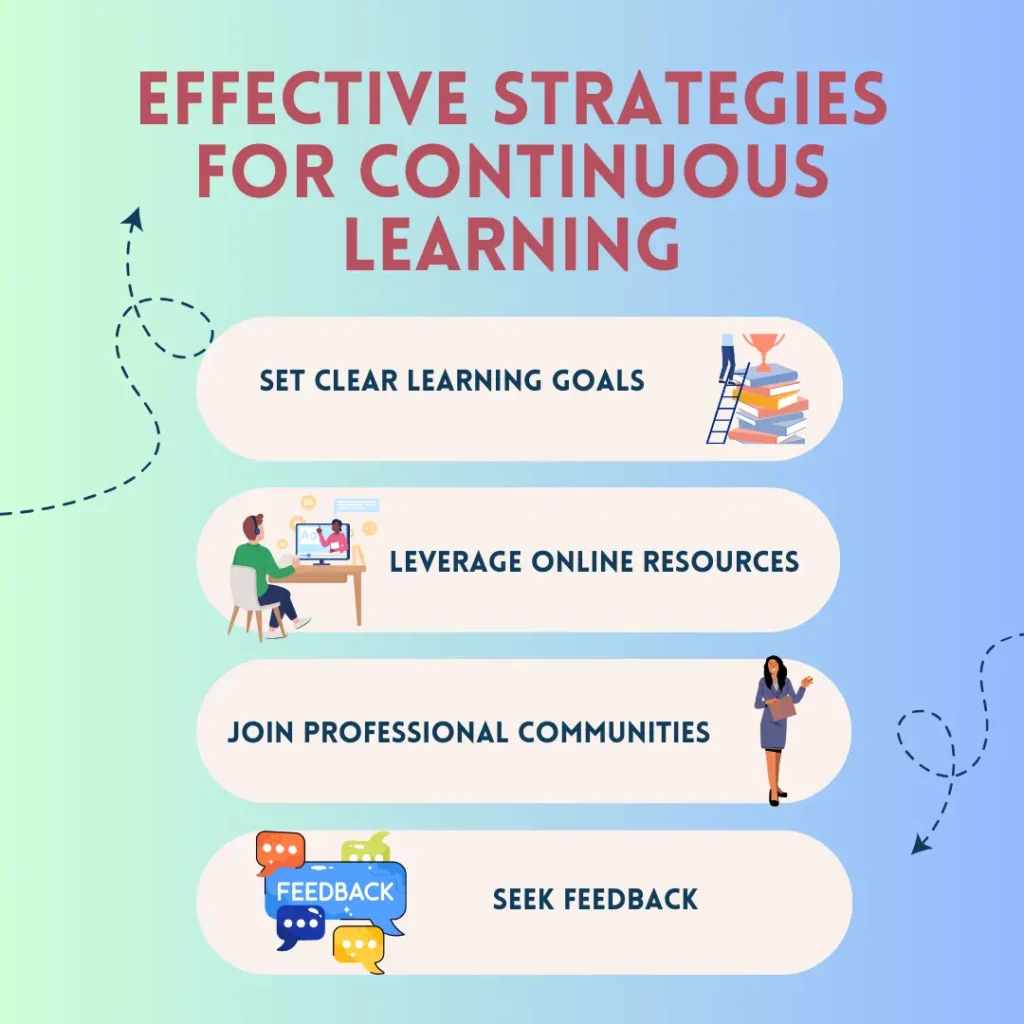
- Step 1: Set clear learning goals
Define specific skills or knowledge areas you want to improve. Clear goals keep you focused and allow you to track your progress effectively
- Step 2: Leverage online resources
Take advantage of online platforms like MidShift, offering curated courses and learning paths. Use webinars, podcasts, and online courses to learn at your own pace.
- Step 3: Join Professional Communities
Participate in industry groups or forums to exchange knowledge and stay updated on the latest trends. Networking can also lead to new learning opportunities.
- Step 4: Seek Feedback
Regularly seek feedback from mentors or colleagues to identify areas for improvement. Constructive feedback is essential for continuous growth
The role of continuous learning in career success
Continuous learning is a key driver of career success. By consistently updating your skills and knowledge, you stay competitive and relevant in your field. This adaptability not only opens doors to new opportunities but also positions you as a valuable asset within your organization.
Moreover, professionals who embrace continuous learning are often better equipped to handle challenges, innovate, and lead. This proactive approach to skill development enhances your ability to achieve long-term career goals.
The Mistake of Not Managing Risks and Facing Challenges in Career Planning
Ignoring issues is not an effective management solution
One major mistake in career planning is ignoring risks and challenges, hoping they’ll disappear on their own. This approach is rarely effective and can lead to bigger problems down the road. For example, avoiding difficult conversations or neglecting to prepare for potential setbacks can derail your progress and limit your career growth.
Proactively managing risks involves identifying potential issues early and developing strategies to address them. This not only prevents small problems from escalating but also builds resilience, enabling you to navigate your career with confidence.
MidShift can guide you in recognizing and managing these risks effectively, ensuring that you stay on course toward your career goals.
What will happen if we ignore problems within the workplace?
Ignoring workplace problems can lead to serious consequences. When issues are left unaddressed, they often escalate, causing stress, lowering morale, and reducing productivity. For instance, unaddressed conflicts between team members can create a toxic work environment, leading to disengagement and high turnover rates.
Additionally, ignoring risks in career planning, such as failing to update skills or avoiding difficult tasks, can stall your progress and diminish future opportunities.
Effective risk management is key to maintaining a healthy work environment and ensuring long-term career success.
What are the dangers of not managing risk?
Neglecting to manage risks in your career can lead to serious setbacks. Small issues can grow into major obstacles, potentially stalling your progress. For instance, not updating your skills may leave you unprepared for industry changes, hurting your job security.
Avoiding challenges also means missing growth opportunities, leading to career stagnation.
Strategies for mitigating Risks in career planning
- Identify potential risks early
Regularly assess your career for potential challenges, like skill gaps or industry changes.
- Develop a contingency plan
Prepare for the unexpected by having backup plans, such as upskilling, networking, or exploring new opportunities.
- Seek guidance
Consult mentors or industry experts for insights on navigating risks effectively.
By following these strategies, you can manage risks and ensure steady progress in your career.
Underutilizing Mentorship Opportunities in Career Advancement
The importance of mentorship in career advancement
Mentorship plays a crucial role in career advancement. A mentor provides guidance, shares valuable industry insights, and helps you navigate challenges more effectively. Having a mentor can accelerate your growth by offering advice that’s tailored to your unique career path, helping you avoid common pitfalls.
Mentorship also opens doors to networking opportunities, broadening your connections within your industry. By leveraging the experience and network of a mentor, you can access new opportunities and gain the confidence needed to advance in your career.
Comparing networking and mentorship: essential tools for career growth
Both mentorship and networking are vital for career growth, but they serve different purposes. Mentorship provides personalized guidance from someone more experienced, helping you navigate specific challenges and make informed decisions. A mentor offers insights based on their own career journey, which can help you avoid mistakes and fast-track your progress.
On the other hand, networking expands your professional circle, exposing you to new opportunities and resources. Building a strong network can lead to job offers, collaborations, and valuable industry connections.
Together, mentorship and networking create a powerful combination for career advancement. MidShift helps you access both, ensuring you have the support and connections needed to thrive in your career.
Exploring three key Types of networking for professional advancement
Effective networking comes in different forms, each offering unique benefits:
- Operational networking
Focus on building relationships within your organization. This helps with collaboration, understanding company culture, and gaining support for your initiatives.
- Personal networking
Connect with peers and professionals outside your immediate work environment. This broadens your industry insights, offers new perspectives, and opens up potential job opportunities.
- Strategic networking
Target influential people in your industry who can provide advice, mentorship, or career opportunities. Strategic networking is key for long-term growth and leadership development.
By engaging in all three types, you create a well-rounded network that supports every aspect of your career.
Evaluating the strength of your professional network
To ensure your network supports your career goals, regularly assess its strength:
Diversity: Include peers, mentors, and industry leaders for a well-rounded perspective.
Reciprocity: Ensure relationships are mutually beneficial.
Relevance: Align your connections with your current career objectives.
The risks of neglecting your networking opportunities in career development
Neglecting networking can severely limit your career growth. Without a strong network, you miss out on valuable opportunities such as job offers, collaborations, and insider industry knowledge. Additionally, a lack of connections can leave you isolated, making it harder to navigate challenges or find mentorship.
Ignoring networking can also stall your professional development, as you lose access to diverse perspectives and support.
Overlooking Strengths and Weaknesses in Career Advancement Planning
H3: Benefits of knowing your strengths and weaknesses in career planning
Knowing your strengths and weaknesses is key to effective career planning. It allows you to focus on roles where you excel and identify areas for growth. This self-awareness leads to better decisions, more strategic goals, and greater success. MidShift encourages regular self-assessment to help you make informed career choices.
Guide to conducting effective self-assessments
Conducting an effective self-assessment is crucial for understanding your strengths and weaknesses. Here’s a simple guide:
Reflect on Past Experiences: Review your past projects and roles. Identify where you excelled and where you struggled.
Seek Feedback: Ask colleagues or mentors for their perspectives on your strengths and areas for improvement.
Use Self-Assessment Tools: Leverage online tools or personality assessments to gain deeper insights into your skills and traits.
Set Improvement Goals: Based on your assessment, set specific goals to enhance your strengths and address weaknesses.
How self-assessment tools enhance professional development
Self-assessment tools play a crucial role in professional development by providing clear insights into your strengths and weaknesses. These tools help you identify areas where you excel and where you need improvement, offering a structured way to reflect on your skills.
By using these tools, you can set targeted goals, make informed career decisions, and track your progress over time. This ongoing process of self-evaluation ensures that you remain aligned with your career objectives and continue to grow professionally.
Letting Mental Barriers Hinder Your Career Advancement Planning
Identifying mental barriers in career advancement: recognizing the signs
Mental barriers can be one of the most subtle yet significant obstacles in career advancement planning. These barriers often manifest as self-doubt, fear of failure, or a reluctance to step out of your comfort zone. Recognizing these signs early is crucial. For example, if you find yourself avoiding new challenges or underestimating your abilities, these could be indicators of mental barriers holding you back. Understanding and addressing these internal obstacles is the first step towards overcoming them and achieving your career goals.
Overcoming fear: A key mental Barrier to career progress
Fear is one of the most common mental barriers in career advancement planning. It can hold you back from taking necessary risks, such as applying for a promotion or switching career paths. Overcoming this fear is essential for growth. By facing these challenges head-on, you can unlock new opportunities and move forward in your career with confidence.
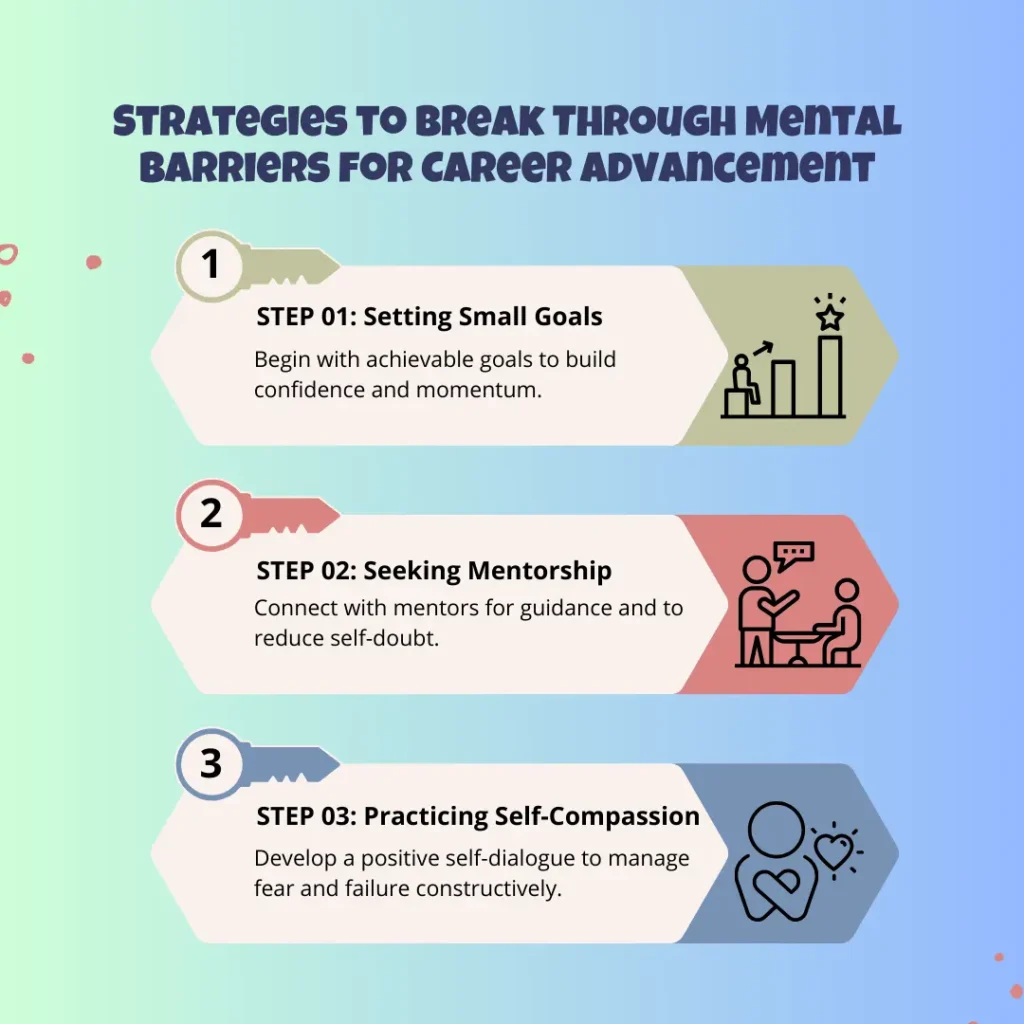
Strategies to break through mental barriers for career advancement
Breaking through mental barriers is essential for effective career advancement planning. Strategies like setting small, achievable goals, seeking mentorship, and practicing self-compassion can help you push past fears and doubts. By taking these steps, you can clear the path to career growth and open yourself up to new opportunities.
The impact of mental barriers on long-term career goals
Mental barriers can significantly derail long-term career goals if left unaddressed. These obstacles often lead to hesitation in decision-making, missed opportunities, and stagnation in your career advancement planning. Recognizing and overcoming these barriers is crucial to staying on track and achieving your career aspirations.
Case studies: Successful overcoming of mental barriers in career advancement
Case studies illustrate how overcoming mental barriers can transform career trajectories. For example, professionals who tackled self-doubt or fear of failure have often reached new heights in their careers. These real-life examples underscore the importance of addressing mental obstacles in career advancement planning, demonstrating that persistence and a strategic approach can lead to substantial success.
Sustain Career Growth by Avoiding Planning Mistakes
In conclusion, avoiding key mistakes in career advancement planning is critical for long-term success. By setting clear goals, aligning your career with personal values, embracing continuous learning, managing risks, leveraging networking and mentorship, and regularly assessing your strengths and weaknesses, you can achieve sustained career growth. Implement these strategies to ensure your career remains on track and aligned with your professional objectives.